

The not-so-private act of getting dressed
The act of getting dressed can be a wild excursion into discovery and identity-expression -
by building personal style and imparting parts of yourself onto certain fabrics and colours. But, when you are alone in your room, choosing what to wear, who exactly are you dressing for?
Perhaps, the clothes look slightly drained on your body in your bedroom, the perfect version of yourself waiting to be lit up by the right gaze amidst the right crowd under the right light fails to materialise. External forces inevitably mean that you end up dressing for where you want to be seen rather than where you are

Too many selves and not enough wardrobes
In this way, getting dressed becomes an act of cosplaying an imagined self, assembled for a life that has not yet, nor may ever materialise. Pursuing self-improvement is admirable, yet it becomes difficult to implement sustainable clothing habits when reinvention follows the trend cycle. For, can you be truly new and reborn, in last season’s dress? Every new aesthetic birthed by the internet feels more dynamic, relevant to the times and promises a more interesting identity. However, before any of it can take root, you refresh your feed and another appears. The search for the self begins again.
We are dressing for a machine that cannot give us the satisfaction we are looking for; it seldom presents us with the idealised conception of our future self. But, we’ve already bought the wardrobe.
Plath’s fig tree revisited

Sylvia Plath wrote the following in 1963:
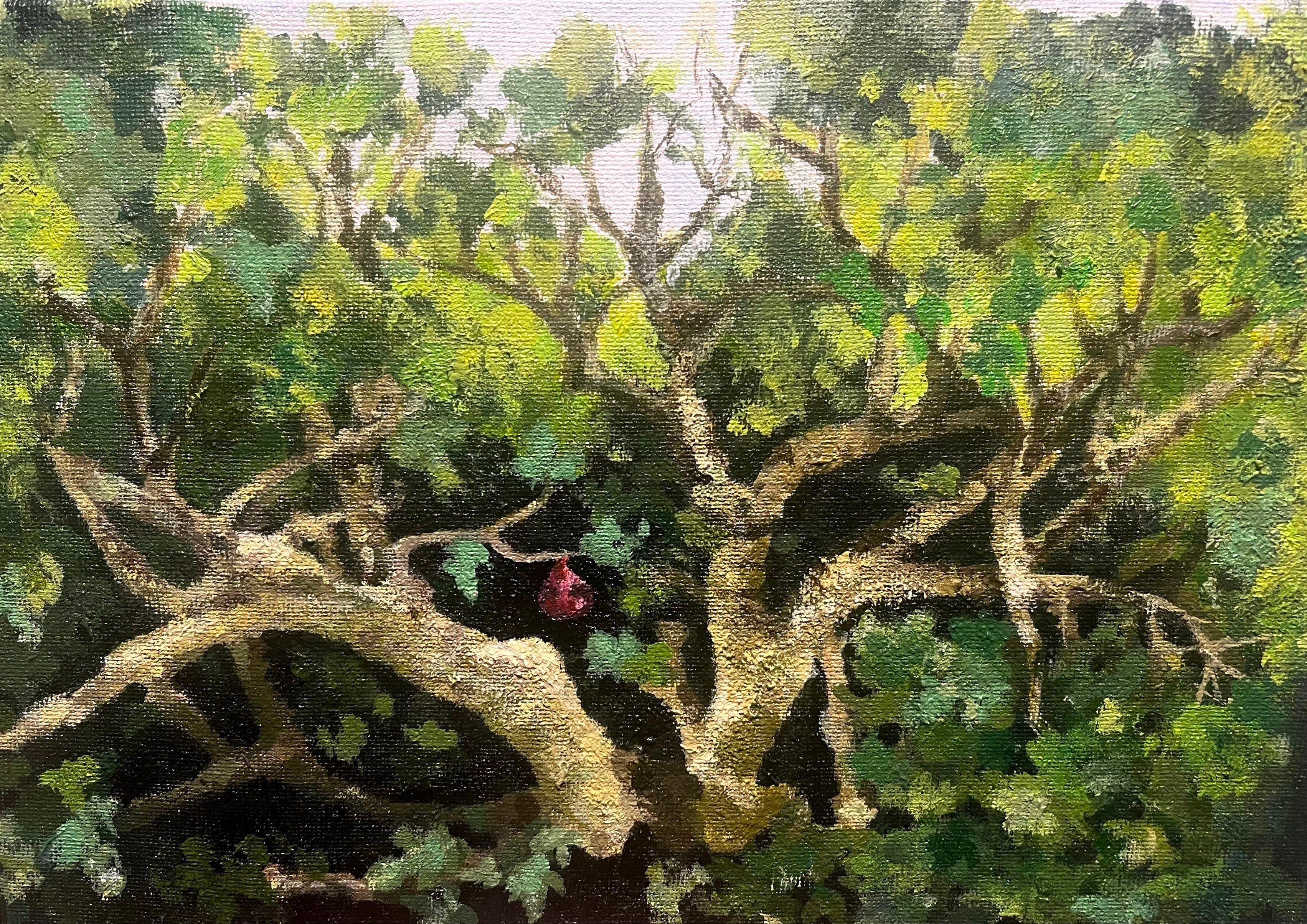
‘I saw my life branching out before me like the green fig-tree in the story. From the tip of every branch, like a fat purple fig, a wonderful future beckoned and winked. One fig was a husband and a happy home and children, and another fig was a famous poet and another fig was a brilliant professor (…) and another fig was Europe and Africa and South America (…) I saw myself sitting in the crotch of this fig-tree, starving to death, just because I couldn’t make up my mind which of the figs I would choose. I wanted each and every one of them, but choosing one meant losing all the rest’
Gen Z circulates it on TikTok with ritualistic devotion. The fig tree passage from The Bell Jar has become shorthand online for the paralysis of choice - too many possible selves:
Societally, we obsess over the figs, but what if we redirect our attention to the tree itself -with its roots and slowly accumulating rings which make the fruit possible. Does this not reflect our identity which grows slowly, bears scars and weathers many.
The self that ripens slowly
Carl Jung referred to this process as individuation, an uneven life-long movement into self-knowledge; a gradual becoming, not an immediate arrival to a finished aesthetic. Because of the nature of thought and language, we tend to fragment experiences into opposites, building neat walls between them – good and evil, old self and new self - when these are facets of the same whole. Jung affirmed that personality is expressed through ‘definiteness, wholeness and ripeness’ (CW 17, par 288). Ripeness requires time. The accumulation of memory is what produces personal style and sustainable clothing habits are less about discipline and more about the conscious choice of what to pour re-wears into; the ripe fruit, when you finally bite into it, will taste of your own personality.
Dressing in the way nature grows
The tree shrivels in December but flowers in April. Though it does not discard its rings to do so. Spring does not entail a total reinvention, nor wipe out what came before. Nature cycles but also accumulates, and so the tree remains the same. The beauty we see in nature lies partly in its resistance to aesthetic control, and it is precisely that resistance which makes it generative.
What would it mean to dress in harmony with the sustainable clothing habits of natural rhythms?
These are more fundamental to life than the laws put into place by humans, and we do observe its occurrence in the day to day. E.g., There is likely a garment which you return to repeatedly, one that you put on without thought after a long day. Perhaps it belonged to your grandmother and carries the accumulated weight of multiple generations. Yet, that accumulated memory is what makes it feel light on your body and its worn fabric is barely noticeable. Something closer to a second skin than a piece of clothing. This garment can be rejuvenated and repaired with embroidery, extending its life and its journey continued. It reinforces your sense of self and its memories are passed on through resale, sharing the grains of knowledge held within its fabric with another body. Sustainable clothing habits are about recognising what has brought you to the room where you presently dress, and the fixed but evolving layers that constitute you.