

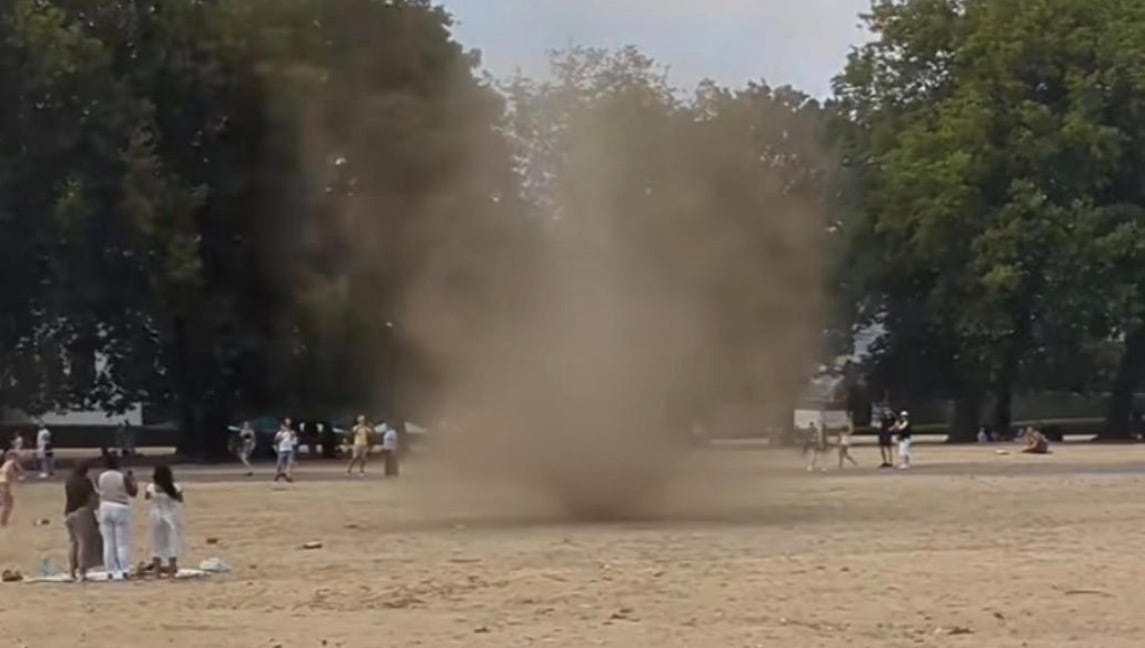
Britain's relationship with the weather has always been turbulent; We complain when it rains, rejoice when the sun shines and seemingly now flee for our lives when a small tornado makes an appearance in Greenwich Park. During a summer of heatwaves and abnormally dry weather, this recent whirlwind, better described as a dust devil, swept across the park, sending picnickers scrambling. While it was perhaps a melodramatic moment, the dust devil does raise an important question - as extreme weather events become more frequent, are we truly adapting to tackle climate change, or are we adapting in our ability to live with it?
The issue is that heatwaves, droughts and flooding are rapidly becoming part of the yearly forecast rather than a once in a generation freak of nature, making Britain's connection with extreme weather less about surprise and more about routine. A picnic may have been briefly amusingly interrupted by the Greenwich Park dust devil, but it arrived during a time of extreme heat and dryness and while most of us may react to a heat wave by grabbing a fan and loudly screaming about the temperature, it takes more than just remembering where to place the paddling pool to adapt to climate change.
This prompts us to consider what ‘adapting’ actually entails. Is it more than merely loading up on sunscreen, purchasing a fan, or checking the weather app before heading outside? In order to adapt to a warmer, more unpredictable environment, we must alter the way we construct and manage our civilisation. Better flood defences, drought-resistant crops, more trees in urban areas and structures meant to keep cool rather than just retain heat could all result from this. Furthermore, adaptation is about ensuring that our homes, towns and infrastructure are prepared for climate change i.e.reducing its impacts in their construction e.g. through solar panels, rather than learning to endure gradually more severe conditions.
However, the problem is that Britain was not designed to withstand the increasingly harsh weather as our houses are renowned for their ability to retain heat, which is great in December, but much less desirable when the temperatures rise. According to the Climate Change Committee, fewer than 1% of homes in England have adequate measures to reduce overheating, highlighting how poorly prepared much of the UK’s housing stock is for rising temperatures. Where there is little green space, roads and concrete absorb heat and cities like London can get very hot relative to more rural areas. Meanwhile in spring, increased rainfall raises the possibility of flooding. When a crisis strikes, we appear to be very adept at responding, but when it comes to getting ready for the next one, Britain feels as though it would rather wait for an imminent warning from the weather forecast before beginning to act.
To conclude, the dust devil in Greenwich Park vanished in a matter of minutes, but the underlying climate conditions won't go away. Although it cannot stop every heatwave, drought, or other extreme weather event, Britain can choose how ready to be for them when they do occur, and what actions they may take in the interim to stop such events occurring in the first place. There should be more infrastructural adaptation in the face of a worsening climate landscape, purchasing a new fan will not suffice.