

A defining cultural feature of celebrity life is the judgement associated with wearing the same outfit twice. For years, repeating an outfit, especially on the red carpet, was considered a fashion crime - just ask Lizzie McGuire.
In the early 2000s, being labelled an ‘outfit repeater’ was peak embarrassment, however fast forward to 2026 we see that wearing the same outfit twice may not actually have you shelved away in the bookcase of irrelevance - but rather signals that you are environmentally responsible, and are thus stylish. More celebrities are beginning to rewear outfits, directly challenging the idea that style must always mean something new and raises the question: can outfit repetition finally become a cultural norm rather than a fashion faux pas?
As outfit repetition becomes increasingly accepted into celebrity culture, for the masses its uptake is spurred by genuine desires for greater sustainability and partly adherence to a symbolic trend. Obviously, like all trends, this raises questions about whether it represents real change or simply a rebranding of fashion norms.
From the glitz and glamour of red carpets to designer labels and catwalks, celebrity fashion plays a monumental role in promoting a culture of overconsumption. The global fashion industry is one of the largest contributors to environmental damage, producing vast amounts of output governed by fast-changing trends - often these are single use. Celebrities are constantly being photographed and shared across media platforms acting as powerful trendsetters to the consumer, thus their rapid outfit rotation trickles down into the behavior of the masses. The expectation for celebrities to always appear fresh in never-before-seen looks has reinforced the disposability of clothing and deems outfit repeating as unfashionable and unacceptable.
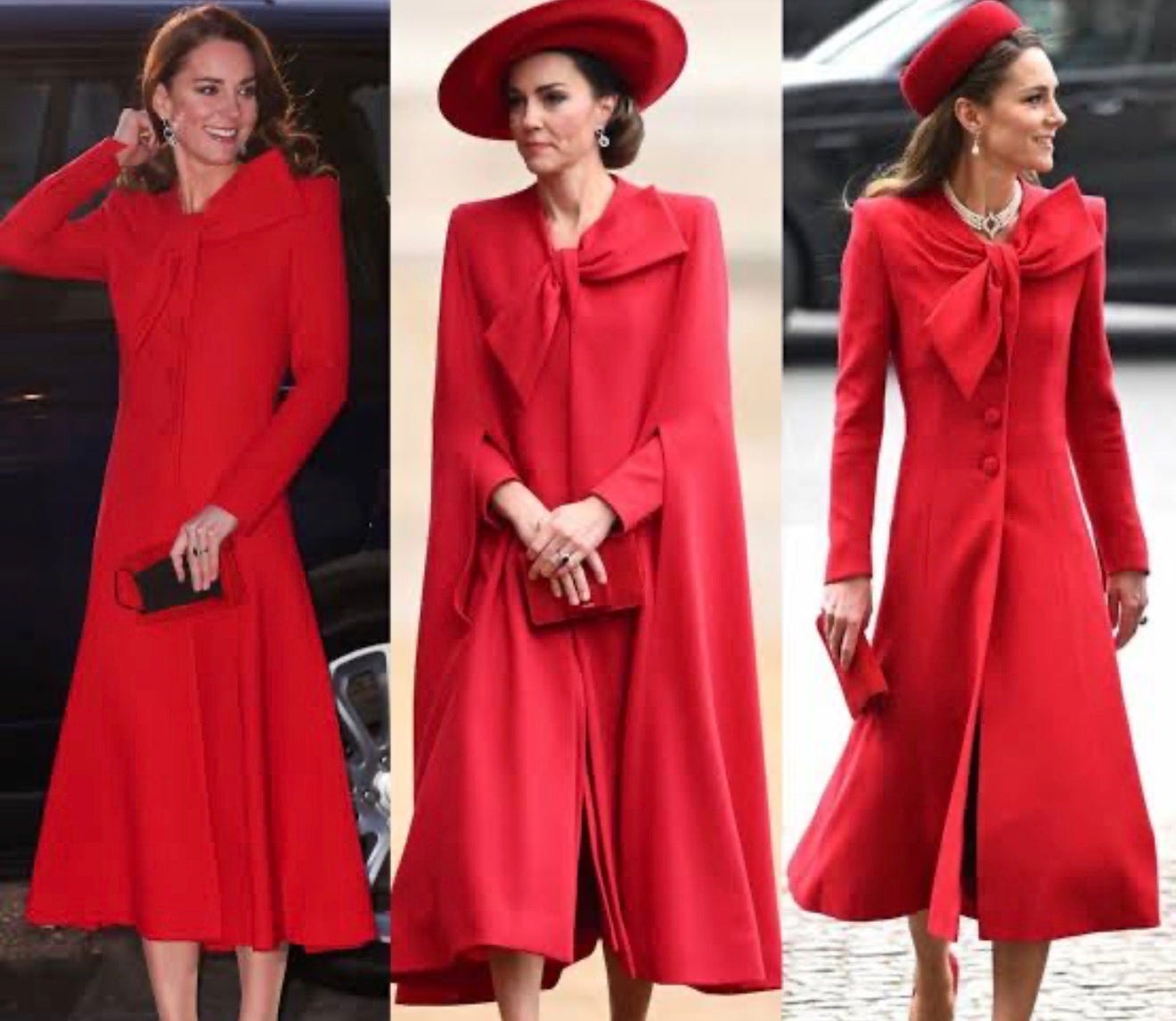
On the other hand, recent years have reflected a massive shift with many high-profile figures starting to challenge the expectations of the public sphere, with Catherine, Princess of Wales being a prominent example. Her frequent rewearing of coats and dresses at high profile public events whilst maintaining an elegant and classy image, reflects how outfit repetition is no longer a faux pas. Zendaya has also embraced public outfit repetition - reintroducing past looks and transforming them into a display of artistic intent.

Despite these cultural shifts, outfit repetition is still far from being an integral to celebrity fashion as the industry continues to rely on the idea of ‘newness’ pressured by a red carpet appearances opportunity to serve as global advertising for designers. Celebrities are often expected to display the latest collections maintaining a constant cycle of visibility for the brand they represent and promotion whilst the combination of social media - needed to draw in audiences to ‘viral’ fashion moments, amplifies the pressure. Amidst this environment repeating an outfit can risk potential criticism or reduced attention and though some celebrities are beginning to challenge expectations, the broader system still favours constant reinvention over reputation.
As climate awareness bolsters - particularly amongst gen z, audiences are increasingly expecting public figures to demonstrate environmental responsibility. At the same time, there has been a significant rise in valuing authenticity and relatability particularly amongst younger audiences who are more likely to appreciate celebrities that appear realistic as opposed to unattainable. Platforms like TikTok have also helped to normalise outfit repetition with users rewearing clothes and styling them in different ways - giving kudos to celebrities who engage in outfit repetition, as seen with the praise of Zendaya online following on from her recent marriage. In this constantly changing cultural landscape, repeating an outfit can signal awareness which slowly suggests that fashion is beginning to align with broader conversations about sustainability.
To conclude, it remains unclear whether outfit repetition represents meaningful change or simply a new form of image management. On one hand, when celebrities rewear outfits it can help to normalise sustainable habits and challenge the idea clothing must be new but on the other hand, many of these instances are occasional rather than consistent, raising the suspicion that outfit repetition is being used as a strategic gesture that signifies environmental awareness without actually requiring significant changes to consumption. Looking forward, the future of outfit repetition in celebrity fashion remains uncertain but its growing visibility suggests that there is potential for lasting change. If more celebrities embrace rewearing clothes it could help to redefine what is considered stylish, shifting the focus from constant newness to creativity within what one already owns.