

It’s that time of year where everyone is talking about the infamous two weekend phenomenon that is Coachella festival. From the outfits to the headliners, Coachella has been all anyone can talk about recently, but rather than discussing who wore what and who brought who out on stage, let’s talk about the core of the festival - the desert.
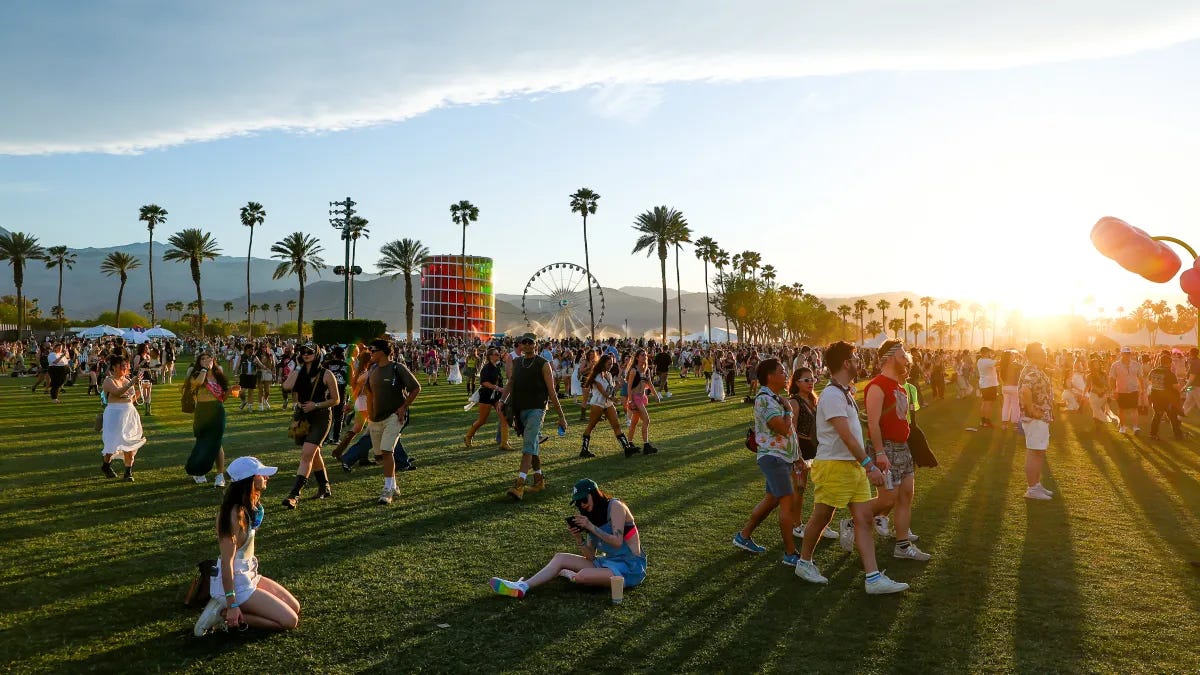
The festival transforms the desert into something of a movie set and the once blaring heat isn’t simply a commonplace feature of the weather, it’s an integral part of the aesthetic. In many ways one may call this ridiculous. The desert, once a sweltering landmass to be survived in, now functions as a hot (excuse the pun) accessory. This actually dampens its image as an extreme environment and lends it a more photogenic backdrop, where somehow everyone’s thriving. What makes it even funnier is how quickly the desert gets a personality makeover - frightening heatwaves turn into a friendly golden glow and the blinding sun turns into dazzling spotlight for the myriad of influencers and celebrities.
At Coachella the elements aren’t obstacles, they’re part of the art direction and the more savage they get, the better it looks on camera. Attendees must also fall in line - somehow the safety measures went from bring an extra bottled water to bring a better outfit.
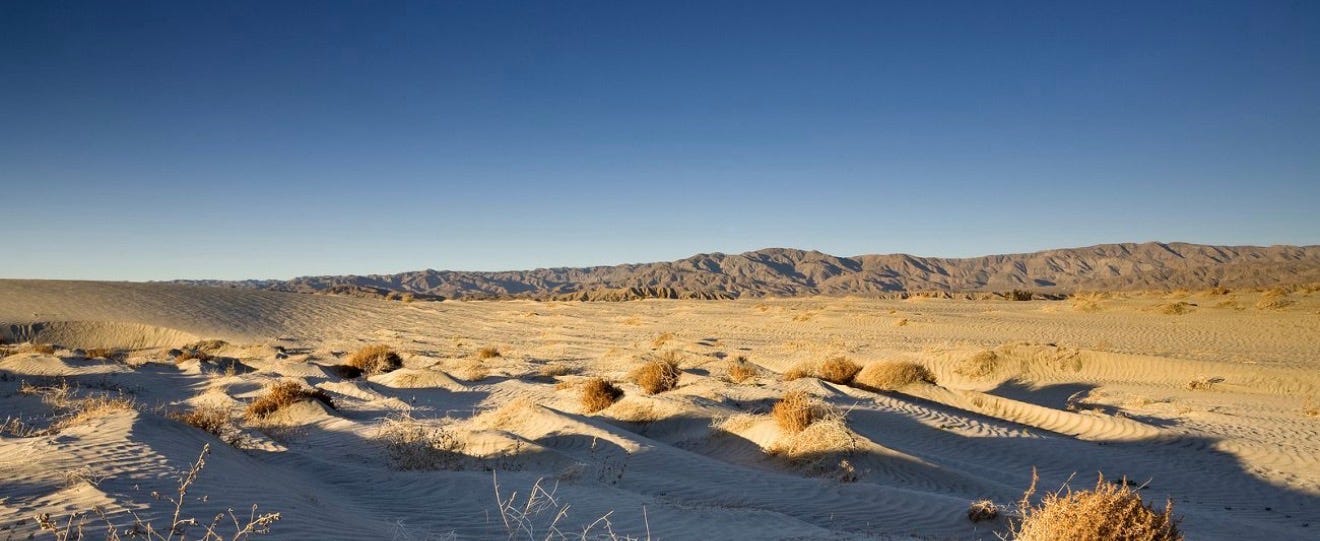
However, this shift isn’t just playful, it alludes to a broader pattern in how the climate is being framed within cultural spaces such as Coachella festival. Environmental conditions are no longer simply endured or even highlighted as challenges, they are now reinterpreted as visual assets. Heat, light and emptiness manifest into design elements rather than Global issues to confront and this results in a desert that feels detached from ecological reality. Coachella’s presentation of the desert focuses on atmosphere and aesthetics rather than highlighting environmental pressures that shape the landscape in the first place.
This framing strips away the landscape’s complex ecological systems and long standing cultural histories, reducing them to a visual backdrop for global audiences. A clear example of this was at the 2026 installation entitled ‘Desert Drifters’ which was a series of oversized kites made entirely from recycled materials. While this is rooted in sustainability, it presents itself as a whimsical spectacle in the sky and this creates an interesting contradiction as the environmental message is embedded in the materials, but visually the work reads more as an aesthetic experience than a direct commentary on waste or overconsumption. In other words, the climate critique is there, but it’s subtle and easy to overlook. This tension becomes even more pronounced when considering the temporary nature of the work itself as large-scale installations at Coachella are often designed to last only for the duration of the festival, despite requiring significant resources to produce, transport and dismantle. So while some pieces incorporate recycled sustainable materials, the overall lifecycle of these works raises questions about efficiency and impact. The result is a paradox in which a fragile environment becomes the stage for short-lived artistic interventions, many of which engage with nature conceptually, whilst still contributing to the very pressures they seek to condemn.

To conclude, when taken together, these dynamics suggest that festivals like Coachella are not simply responding to climate change, they are actively reshaping how it is experienced and understood. By translating environmental conditions into atmosphere, climate transforms into something to engage with aesthetically rather than politically. However, this doesn’t mean the work lacks value, but it does shift its impact as what emerges is a version of climate change that is easier to look at than to reckon with. This is one that invites reflection, but rarely demands action.