

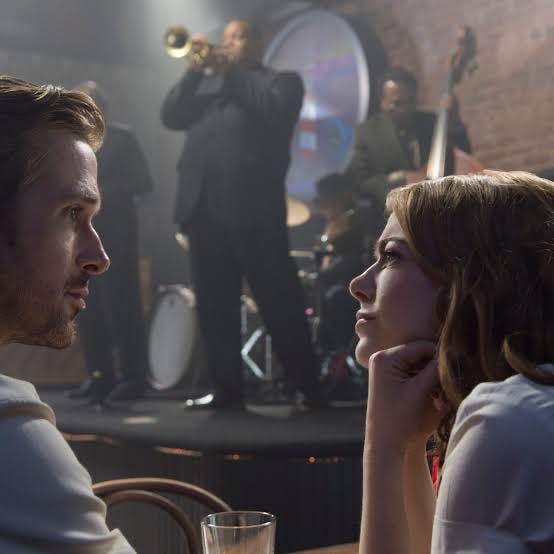
“I should probably tell you something now, just to get it out of the way…
I hate jazz”.
Emma Stone’s character Mia drops this bombshell on Ryan Gosling’s Seb in the 2017 film La La Land.
It’s fair to say this was not a hot take at the time. Far on from its heyday in the mid-20th century, jazz had come to be seen as a niche art form, and even the subject of staunch odium by many.
“It’s just noise”, is a frequent accusation labelled at the musical genre. Seb sees things very differently, offering the perfect retort to Mia and her fellow haters:
“It’s conflict and it’s compromise, and it’s just… it’s new every time. It’s brand new every night. It’s very, very exciting!”
A decade on from the film, and jazz is now viewed in an altogether more positive light. The Night Time Industries Association reported a 20% increase in small-venue jazz programming in London between 2019 and 2024 and ticket platform Dice reported a 34% increase in jazz event listings in the capital between 2021 and 2024. Younger audiences are driving the shift too, with under-35s now making up more than a third of listeners.
Not only is turning to jazz good for the soul, but it’s good for the planet, too. While mainstream nightlife chases LED walls and pyrotechnics, the UK jazz revival has quietly become the most sustainable form of nightlife: hyper-local, low-tech, and rooted in community rather than spectacle.
It’s not hard to see why people are drawn in. From old-school crooners like Chet Baker to London’s nu-jazz vanguard - Ezra Collective, Kokoroko, Yussef Dayes, Steam Down - jazz boasts the sheer variety to cater to a multitude of different audiences.
The resurgence is as much cultural as it is musical. Jazz has become a social technology: a way of gathering, listening, and being in a room with strangers without the mediation of screens. In a post-COVID society that craves connection more so than ever, jazz is an ideal tonic.

Nightclubs and larger music venues are among the most energy-intensive cultural spaces in the country. A 2023 Julie’s Bicycle report found that a typical mid-sized club (500-1,500 capacity) uses between 150,000 and 300,000 kWh of electricity per year. For comparison, that’s the annual electricity consumption of 40-80 UK homes.
Jazz, by contrast, is almost aggressively low-tech. Most jazz nights operate with minimal amplification, often relying on acoustic instruments and small setups that draw a fraction of the power of a club system.
The economics reinforce the sustainability and London’s jazz revival is thriving in intimate spaces - pubs, cafes, bookshops. Jams are repurposing existing infrastructure rather than demanding new builds, and events often run earlier in the evening, reducing the need for late-night energy usage and the carbon heavy logistics associated with 3am club culture.
What’s emerging is a model of nightlife that is low-carbon by design, rather than by offset. It’s a form of going out that aligns with the values of a generation increasingly conscious of climate impact but still hungry for culture, connection and collective experience.
There are now countless places across the city where you can go and witness exciting, live jazz each and every evening. From established mainstays like Ronnie Scott’s in Soho and Jazz Cafe in Camden to smaller-scale, intimate jams like Orii Jam in Hackney, Steam down in Peckham, The Sunday jam at the Haggerston and NT’s Loft Wednesday Jazz jam. London boasts a smorgasbord of soul to satiate each and every appetite.
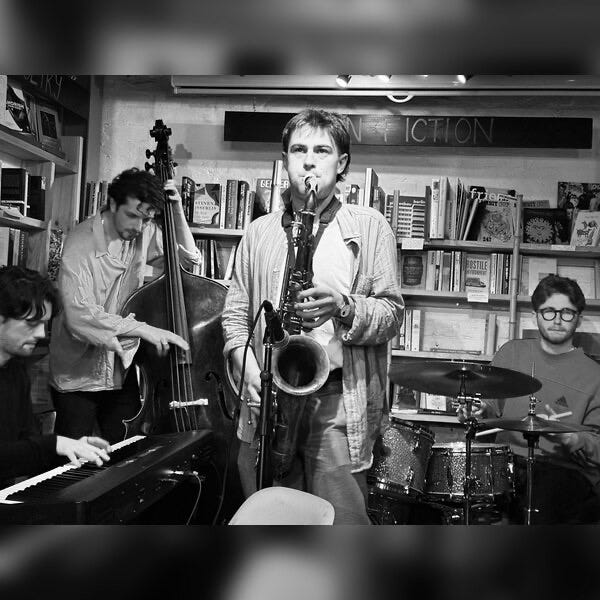
A decade ago it seemed as though jazz was in a state of peril.
Seb laments: “It’s dying Mia. It’s dying on the vine. And the world says, ‘Let it die. It had its time”.
But somewhere along the line the world has changed its mind - and thank god it did.